Author name: Slyfox Web Design

Uncategorized

4 Questions To Ask Before Installing A Pool Heater

A pool is a significant investment in time and energy, so it’s frustrating to maintain your pool and not be able to use it during the late spring and early fall, or during a summer cold snap. A pool heater can extend the time you can enjoy your pool, but not all heaters are created equal.

In a perfect world, a pool heater would be energy efficient, work quickly and heat evenly, make no noise, last a long time, be cheap to purchase and install, and require no maintenance. Unfortunately, you’ll have to make a trade-off somewhere. Here are four questions to ask (or research answers for) before investing in a pool heater.

My Heating & Cooling Guy offers a wide selection of technologically advanced pool heaters that are designed to keep you and your family splashing all summer long.

How Much Do You Want To Spend?

Most pool heaters require professional installation, but some require more time to install, have more components to set up than others. Some models are going to be cheaper to purchase, but may cost more if repairs are required down the road. You’ll have to decide if it’s worth the up-front cost of a high-end model, or whether you’ll go with something a little cheaper and maintain it down the road.

What Does It Cost To Run?

Pool heaters can be solar, gas, or electric powered. There are different costs associated with powering each one. Solar powered heaters require a lot of sunny weather, and here in London, Middlesex, Huron and Perth counties we can have extreme weather even in the summer months. How much or how often you plan to use your pool heater may determine whether the more expensive to purchase but cheaper to run gas powered is better for you than the cheaper to buy but more costly to run electric powered models.

If you live in a rural location, a gas pool heater may not be an option. If your pool is shaded or the terrain interferes with solar, that may not be an option for you.

Most Effective At Heating

Do you want the pool to warm up quickly and evenly? Do you want to the pool to stay warm all day because you might want to take a spontaneous dip? This will determine how much you spend on a pool heater and how much it will cost to run. If you’re happy to turn on the heater an hour before you use the pool and live with some cool spots that offers some cheaper options.

How Loud Is It?

Some electric pool heaters create very little noise. Other heaters come with compressors, fans, pumps and extra motors that will generate some level of noise. If you live on a quiet residential street, or want to maintain a quiet outdoor environment, this is definitely something to think through ahead of time.

The heating and cooling experts at My Heating and Cooling Guy service all parts of Middlesex, Huron and Perth counties. Contact us for a free in-home, no obligation quote for your pool heater repairs or installation projects and all your heating and cooling needs.
Uncategorized

5 Tips To Help With Allergy Season

Who doesn’t love spring? You might have a love/hate relationship with the season if you struggle with seasonal allergies. All that grass and pollen in the air can leave you miserable for days or weeks at a time. Don’t let allergy season get you down! Your furnace and air conditioner play a big role in the air quality in your home. It doesn’t take long for particles and allergens to spread through your whole house.

You can take steps to reduce the allergens in your home, but in addition to the easy steps below you should get your air conditioner and furnace served to make sure the equipment is running efficiently to properly filter the air. The HVAC experts at My Heating and Cooling Guy can help improve the air quality in your home.

New Air Filters
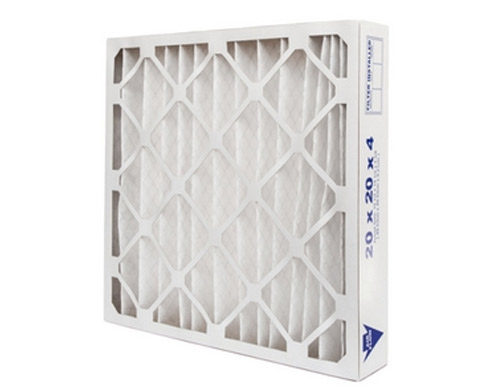
The air filters in your furnace and air conditioner trap debris and other particles in the air from spreading through your home, but efficiency plummets if filters are old or dirty. Filters vary in their efficiency and often you get what you pay for. High quality filters remove airborne particles, odours, bacteria, and up to 99% of pollen, dust, and pet dander. Make a habit of replacing the air filters every spring (you should change them more frequently than once a year). My Heating and Cooling Guy can add additional filtration systems to your home to increase the efficiency of your air filtration system.

Clean Return Vents and Registers
Dust, allergens, pet hair and other allergens can get trapped in or around your vents and registers. Your air conditioner and furnace will then just blow those particles throughout the house. This lowers the indoor air quality and can trigger allergy symptoms. Wipe down vents and registers with a warm damp rag to remove any build up or debris.

Close The Windows
It’s tempting at this time of year to throw open the windows and let some fresh air in. The problem is the spring air is full of pollen and other potential allergens. Instead, on high-pollen days, seal the house and turn on the heat or air conditioning. Alternately, there are systems available that will bring in fresh air from outside and remove the stale air from indoors, and filter the air to remove the pollens.

Adjust Indoor Humidity
The general rule is to aim for 60% humidity in your house, but if you are sensitive to mold you might consider aiming for lower than 50%. You may need a whole-home dehumidifier to help. You could purchase a portable dehumidifier, but a whole-home dehumidifier can control the humidity throughout the house not just in one room and will be more energy efficient.

Other Home Tips

  • Take your shoes off at the door in the summer so you don’t track pollen throughout the house.
  • Make sure to vacuum and sweep often to keep pet dander down.
  • Shampoo your pets with a dander shampoo regularly.
  • Consider swapping out carpets for hardwood, laminate, or ceramic flooring

The experts at My Heating and Cooling Guy service all parts of Middlesex, Huron and Perth counties. Contact us for a free in-home, no obligation quote for all your heating and cooling needs.
Uncategorized

DIY Spring Air Conditioner Tune Up

Spring is in the air, but summer is coming soon. Is your air conditioning system ready to handle whatever summer dishes out? Don’t forget your air conditioning system in your spring cleaning. This is the time of year to troubleshoot any problems before you’re left out in the…heat.

Here are My Heating And Cooling Guy’s top tips for an air conditioner tune up to get you ready for summer. These are simple tips anyone can do. But for a thorough tune up and service inspection, be sure to call us for a quote. Remember, air conditioners use enough electricity to cause serious harm and injury so be careful. Or better yet, let us handle the work for you!

**Air conditioners have two units – an indoor unit that located near your furnace and an outdoor unit (this does not apply to window units). If you have disconnected power to your air conditioner over the winter, don’t start up the unit immediately. Let the outdoor unit sit for 24 hours plugged in without turning it on – this will cause less stress to the motor and other components.


  • Inspect your furnace filter and change if necessary. Make sure to turn the furnace off first to avoid blowing dust throughout your house. Filters should be changed regularly, but changing it every spring is a good practice.
  • Clear any debris that may have collected around the air conditioner. Leaves and sticks left over from winter may have gotten in there. Sometimes grass clippings from the lawn mower or dandelions are common. This improves the efficiency of the unit.
  • Trim the grass and garden back from the air conditioner unit so that all air intakes and exhausts are free of obstructions. The goal is to ensure there is plenty of air circulation around the unit.
  • Take the cover off the outdoor air conditioning unit (before you turn it on). Forgetting to do this can lead to costly but avoidable repairs.
  • Inspect the insulation around the unit for damage. Replace as needed.
  • Check the concrete beneath the air conditioner unit for cracks or shifts in the earth beneath the pad. As the ground freezes and thaws it can shift. You want to make sure the air conditioner is sitting on level ground.
  • Turn on the air conditioner and let it run for a bit. Listen for any noise that might warn of a repair. Is the house cooled evenly or are there warm spots? Sometimes dealing with these issues right away prevents a more costly repair down the road.
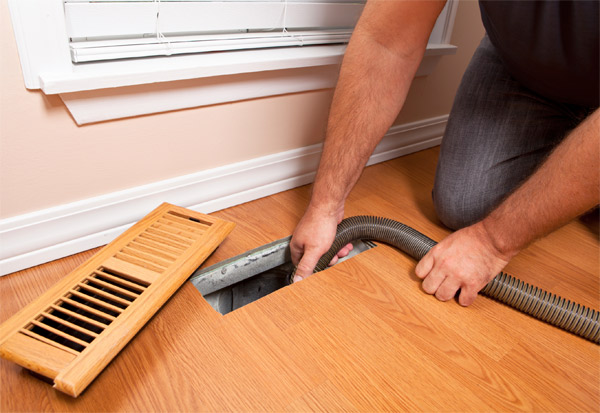
  • Spring is a great time to clean out the floor vents.
  • If you have an older air conditioner, spring is a great time to consider investing in a newer model. New technology means air conditioners are quieter, more efficient, and use less energy than older models. You may even save enough on the energy savings to pay for the new unit within three or four years.


If you work through these steps and find a problem or just want a more thorough tune up, we offer comprehensive air conditioner maintenance and repair. We’ll inspect all moving parts, filters, and valve connections so you stay cool all summer long!

The experts at My Heating and Cooling Guy service all parts of Middlesex, Huron and Perth counties. Contact us for a free in-home, no obligation quote for all your heating and cooling needs.
Uncategorized

Spring HVAC Tune-up: What You Need to Know

Spring is almost here, and with sunshine and muggy weather just a few short months away it is time to schedule your Spring HVAC tune up. Don’t let faulty appliances and unreliable home heating and cooling make this spring and summer uncomfortable. Instead, schedule a Spring HVAC tune up to make sure you’re ahead of the game.

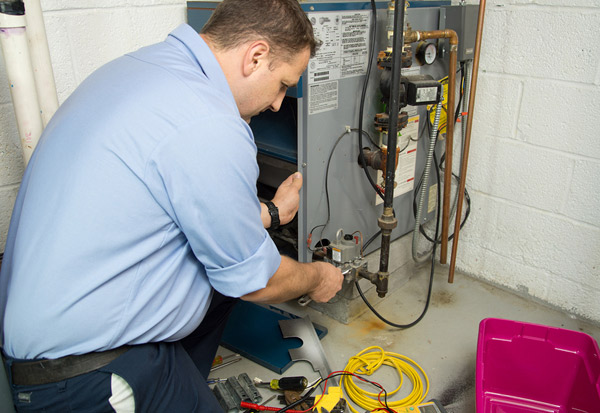
During a Spring HVAC tune up, your Heating & Cooling Guy technician will begin by checking the thermostat settings. This is to make sure that both the heating and cooling processes are working properly to keep you comfortable at all times. Next, all of the electrical connections will be measured to ensure that they are operating at the appropriate voltage, and that the motors are not in danger of wearing out this season. During this step, all the moving parts will be lubricated, and the condensate drain will be inspected. This is an important step, as a clogged drain can cause water damage and negatively affect the humidity levels in your home.

London’s Air Conditioner Tune Up Specialists

During a Spring HVAC tune up, the cooling mechanisms are obviously the most important areas of concern. To accommodate for the season of cooling coming up, the evaporator and condenser air conditioner coils will be cleaned. When these coils are cleaned, your air conditioner does not have to work quite so hard to get the job done. The refrigerant levels will also be checked and adjusted as necessary. Both too much, or too little refrigerant can cause your air conditioner to expend unnecessary energy calibrating itself. Another crucial step in a Spring HVAC tune up is adjusting the blower components to make sure that the right amount of airflow is cooling your home. Lastly, all of the shutdown and startup controls will be manually checked to ensure that they’re working flawlessly.

Schedule Your Spring HVAC Tune Up Today!

The best time to schedule your HVAC tune up is before you actually need to start using it. So, while you’re still wearing layers of wool, and planning your summer vacation, plan ahead. Call My Heating & Cooling Guy today to schedule your Spring HVAC tune up. By planning ahead, you can be confident knowing that your air conditioner will be ready as soon as that first wave of heat hits London and the surrounding area!

Of course, there are a few things you can be doing year round to keep your HVAC unit functioning properly. Regularly inspect, clean, or change the filters in your HVAC unit. This will keep it functioning as efficiently (and as inexpensively!) as possible. Not only do dirty filters affect the efficiency of the unit, but it can also lead to early failure and even damage.

Call 226-919-8475 today to schedule your HVAC Spring Tune Up!

Uncategorized

How My Gas Furnace Works

If you are a new homeowner, it’s important to have a basic knowledge of how your gas furnace works since it does a big job in your home and it’s often not thought about until it breaks. Having an understanding, even elementary, also helps you comprehend what a technician is talking about when your furnace gets its annual inspection or can help you identify potential problems with your heating system.

Three Parts to a Furnace

There are essentially three main parts to a furnace which all need to work together to keep your furnace working properly and efficiently:

  • Burner (heats the air), heat exchanger (transfers the heat to the surrounding air), draft inducer and vent
  • Controls and safety devices
  • Air movement and blower

Starting with the Thermostat

You set the temperature on your thermostat to a desired comfort level and when the temperature goes below that temperature an electrical signal is sent from the thermostat to the furnace. A relay signals the natural gas valve to open and fuel the burners, turning both the burners and blower on and mixing the air drawn in by the cold, return-air duct.

Return-Air Duct

This duct draws in fresh air using a fan (comes from other areas of your home – larger grates found in ceilings, floors or walls) which needs to pass through a filter (which you need to change every couple of months) in order to clean the air. This air flows through the box of the furnace where it mixes with the gas and gets lit by an igniter – either the pilot light or electric igniter.

Hot Air

The ignited gas/air mixture becomes hot and rises through the heat exchanger, which is just above the burners and then is distributed throughout when the blower sends the air through your home’s ductwork. There is enough pressure that this air drawing/heating/blowing process happens very quickly.

Humidifier

Some gas furnaces have a humidifier built in which adds moisture to the heated air as it passes through the ductwork into your home, since air dries as it heats. It is connected directly to the home’s water by a small copper pipe, which slowly drips water to into the system. There is also a small pipe to allow for drainage of condensation created by the process. A humidistat is the control which allows you to adjust the humidity levels – more in winter and less in summer.

Exhaust

When air and gas combusts it produces exhaust (carbon monoxide) that must be vented outside of the home either through a vent in the side of your home, or through a chimney and flue in the roof. It is odorless, colourless and tasteless and can be fatal if not vented properly or if vents are blocked. A carbon monoxide detector is mandatory in Ontario homes.

With the basic knowledge of how your gas furnace works, it can help you determine if everything is working in tip-top shape so your home can be as comfortable and efficient as possible.

Uncategorized

Making my Home More Energy Efficient

One simple solution to making your home more energy efficient is to upgrade your HVAC system to a newer more efficient one but if getting a new furnace and air conditioner just isn’t an option right now, but you’d still like to save a bit of money, here are some efficiency tips:

Get Rid of Dust

Dust gets into your ducts and furnace filter, clogging it so the HVAC system has to work harder. Your furnace filter should be changed every 3 months and make sure it’s installed properly – the arrows on the filter should be pointing towards the furnace, not the duct. If you clean your ducts and vents, less dust gets into the air and less dust gets sucked back into the furnace, making your system work more efficiently.  Furnaces can be a breeding ground for bacteria so it’s important to keep it as clean as possible. While you should change the filter yourself, the ducts, fans, and motor need to be cleaned by a professional.

HVAC Check-Up

You should have your system checked twice a year – your air conditioner in the spring and your furnace in the fall. Preventative maintenance ensures your system is running in tip-top shape, as efficiently as it was designed for.

Seal Ducts

When your system is running, feel for spots along your ductwork where air might be escaping, particularly where registers meet floors, walls or ceilings. Use metal tape or mastic sealant (not duct tape, ironically – it doesn’t last) to cover any leaks.

Install a Programmable Thermostat

A programmable thermostat is ideal for people who are not home for periods of time during the day or week. It can be set so that your home changes temperatures to be more comfortable when you are home and cooler in the winter or warmer in the summer when you aren’t home, making your HVAC system work less.

Insulation

Adding new or additional insulation to your walls, ceilings, and attics along with proper caulking along doors and windows will help to prevent cool air escaping during the summer and cold air seeping in during the winter. Fewer air leaks during the winter also can add to the natural moisture of the air without having to run a humidifier.

Windows

Windows can be a major source of heat loss in your home. Newer windows, especially ones with the Energy Star label have double, or triple glazing with sealed glass which has inert gas trapped inside, plus the sashes and frames have insulation built in to prevent air seepage around the edges.

If your windows are older, while leaving blinds and curtains open are wonderful for letting in natural light, they can also let in vast amounts of heat in the summer or cold in the winter. Leaving blinds closed during the heat of the day, particularly if in direct sunlight, can help reduce temperatures greatly on upper floors. Curtains can also be kept closed in the winter to act as a barrier between drafty, cold windows.

Uncategorized

Proper Maintenance

When most homeowners think of spending money on their homes, it’s unlikely that their heating and cooling system first comes to mind. Because it’s stuck down in a corner in the basement, it’s often not thought about unless something goes wrong and it’s not working properly. Being too hot in the summer or too cold in the winter can be just the beginning of the problems, but an unmaintained HVAC system can also lead to increased utility costs and even health issues.

For the Homeowner

Due to the complex nature of a heating and cooling system, there is only so much maintenance a homeowner can personally do, but it is important to schedule yearly maintenance done by a professional.

Replacing the Furnace Filter

One of the best ways to extend the life of your furnace and to keep utility costs lower is to replace the furnace filter every three months and to do it properly. Many also don’t realize that a filter isn’t to improve the air quality in the home, but instead to prevent dirt and dust particles from impacting air flow to the furnace fan and motor. The better air flow to the furnace, the more efficiently it will work. It’s important to choose the proper filter for your system and install it the correct way – the arrows on the filter should be pointing toward the furnace.  If you’re not sure, contact your local HVAC professional.

Cleaning the Air Conditioning Condenser

Another important maintenance task for the homeowner is hosing down the air conditioner twice a year – typically spring and fall – to remove any dust, dirt and other debris such as bugs and leaves. Ensure that the power to the unit is off and use a regular hose to spray it down. It’s also important to keep the area around the condenser free of weeds or other plants or garbage.

Professional Maintenance

Having a professional come in once a year to tune-up your heating and cooling system will help your system run efficiently and can help avoid costly emergency repairs.

Air Conditioner

Late spring is often the ideal time for air conditioner maintenance since it’s important that the temperature is above 21 degrees Celsius. Any lower and it can be difficult to get an accurate reading. They will inspect the outdoor condenser, its fan and coils, refrigerant levels and other mechanical components.

Furnace

Late summer or early fall are the best times for a furnace inspection since the outside temperatures are often warm enough to not need the furnace to heat your home. Professional licenced HVAC technicians should check the following items during a tune-up:

  • Gas pipes to the furnace, including a carbon monoxide test
  • Chimney and flue for any debris
  • Air filters for proper installation and cleanliness
  • Gas pilot light and burners for safety and cleanliness
  • Motor, fan and blower for cleanliness and proper operation
  • Fan belts and other adjustments on older furnaces

A well maintained heating and cooling system will keep costs down, improve air quality and help you to feel comfortable in your home.

Uncategorized

Understanding Your Central Air Conditioner

How operational your central air conditioner system can make or break your summer. There’s nothing worse than trying to sleep through a hot and humid night. Having a basic knowledge of your air conditioning system can help you determine if repairs are needed or will help you understand the HVAC technician when they come to do your yearly tune-up and inspection.

Basic Terms:

BTU – British Thermal Unit – this measurement of energy is the amount of energy needed to raise one pound of water by one degree Fahrenheit. For air conditioners, BTUs measure how much heat an air conditioner can remove from a room over the course of an hour.

Capacity – an air conditioner’s capacity is a measurement of how quickly heat is removed from an air conditioned space. The cooling load of a room (how much heat builds up in a space without any A.C.) is needed to determine the conditioner’s capacity. A ton is a measure of capacity. One ton of cooling capacity equals 12,000 BTUs.

Energy Efficiency Ratio (EER) – this is a measurement of how much cooling the air conditioner provides by how much electrical energy it uses when continuously operating for a specific amount of time. Air conditioner manufacturers must determine the EER of their units in order to meet the qualifications of Canadian Energy Efficiency Regulations and be given the EnerGuide label of approval. The higher the EER, the more efficient the air conditioner is. The units with the highest level of efficiency are given the Energy Star label and are determined to save a customer 30-40% in utility costs as compared with a unit sold 15 years ago.

Bel (B) – a measurement of sound which equals 10 decibels (dB). Some Ontario municipalities have by-laws which regulate how loud an air conditioner is during operation. Plus, the sound can be annoying for you or for your neighbours.

Central Air Conditioner Components

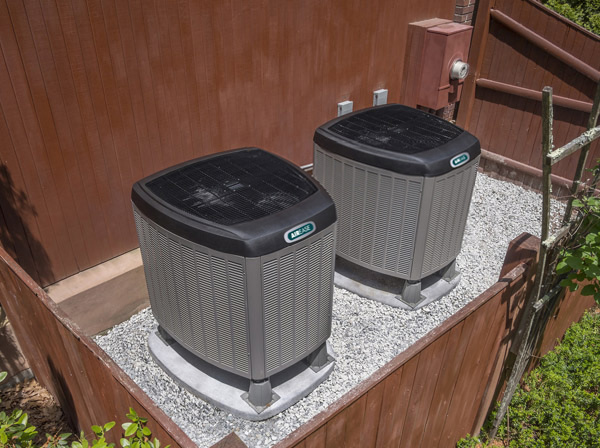
Condensing Unit – the outdoor unit which cools the hot inside air and sends it inside to the indoor unit. It contains a compressor, fan, condenser coil, refrigerant and evaporator coil.

Air Handler – the indoor component of the central which takes the cool air from the outdoor unit and sends it through the ductwork, through the house – most often a gas furnace, without the heat

Refrigerant – the fluid which runs through the unit and works by absorbing and releasing the heat

Coil – a series of looped tubes which the refrigerant runs through and where the heat transfer happens

Expansion Device – changes the refrigerant liquid into a low-pressure gas/liquid mix (vapour)

Evaporator Coil (indoor coil) – takes the remaining liquid refrigerant (after it’s been through the expansion device) absorbs the heat, boils and turns into a low-temperature gas

Compressor – the refrigerant gas molecules get compressed to increase the pressure and temperature, turning into a vapour

Condenser Coil (outdoor coil) – allows the refrigerant vapour to give off its heat to the outside air after being compressed and once again become a liquid

Scroll to Top